MONAD PRECISION ENGINEERING
Monad at 50: A New Chapter in Precision Engineering
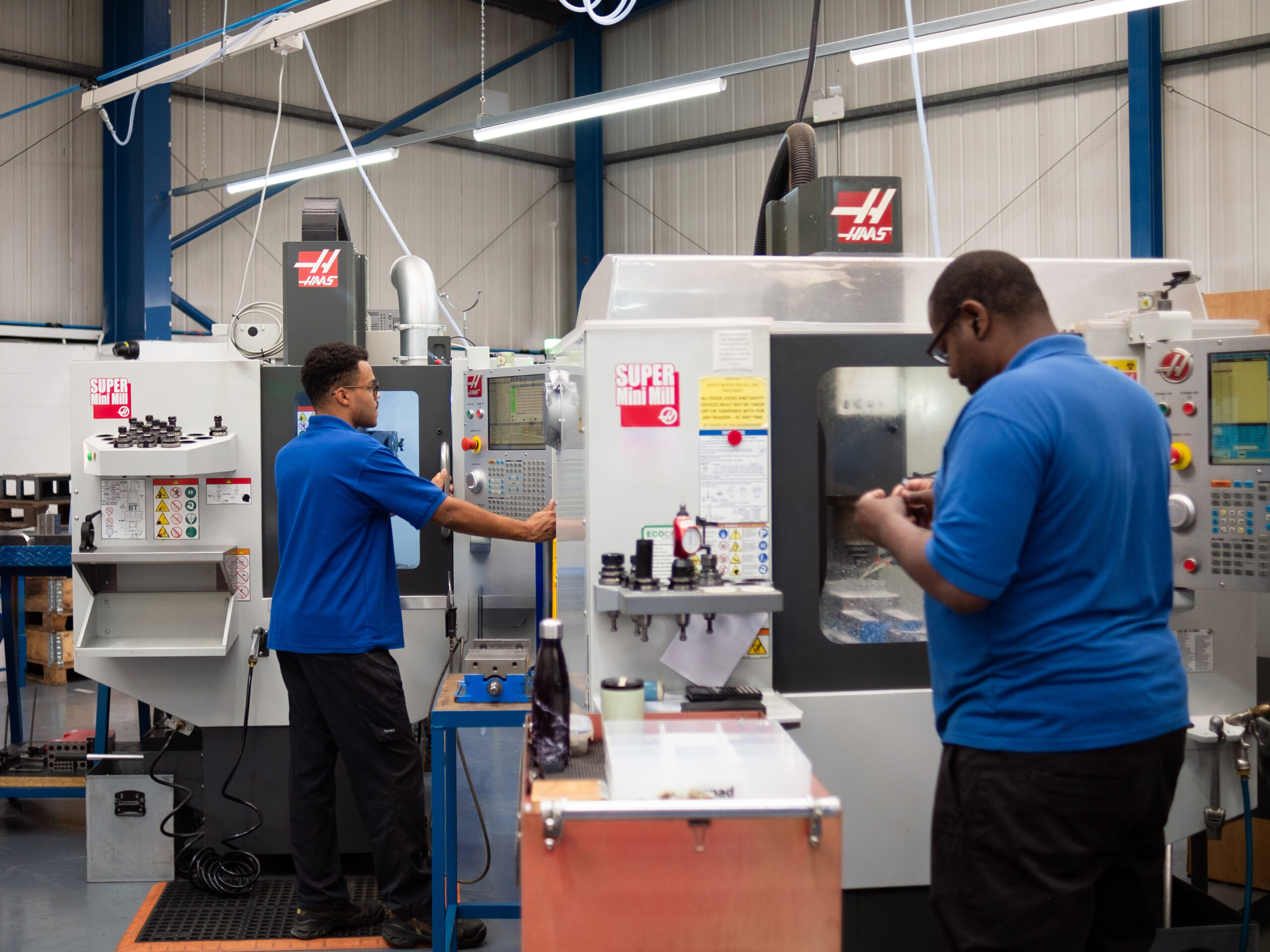
A ‘monad’ is a single, indivisible unit, the fundamental building block. Now, more than ever, it’s the ideal name for Monad Precision Engineering, who have recently acquired a 6,500 ft² factory in Esher, Surrey, combining their two former, smaller premises into a single integrated facility. Featuring a fully refurbished workshop, modern office space, and a temperature-controlled inspection centre, the new site brings their 25-strong workforce together under one roof.
“This move instantly boosted our efficiency,” says owner Steve Reeder. The relocation coincides neatly with Monad’s 50th anniversary. A family-run firm through and through, Steve and his three sons pride themselves on tackling the toughest challenges in precision engineering. “We actively seek out complex, demanding jobs others shy away from. That’s what motivates us.”
Monad Precision primarily serves the aerospace and oil & gas industries, working closely with select customers who supply numerous end users, ensuring varied and engaging projects. “Our staff stay with us long-term,” Steve notes, “they enjoy the daily variety and the broad capabilities our CNC machines provide. One day we’re machining components for lasers, the next it’s submarine parts, we even manufactured components for the Large Hadron Collider in Switzerland.”
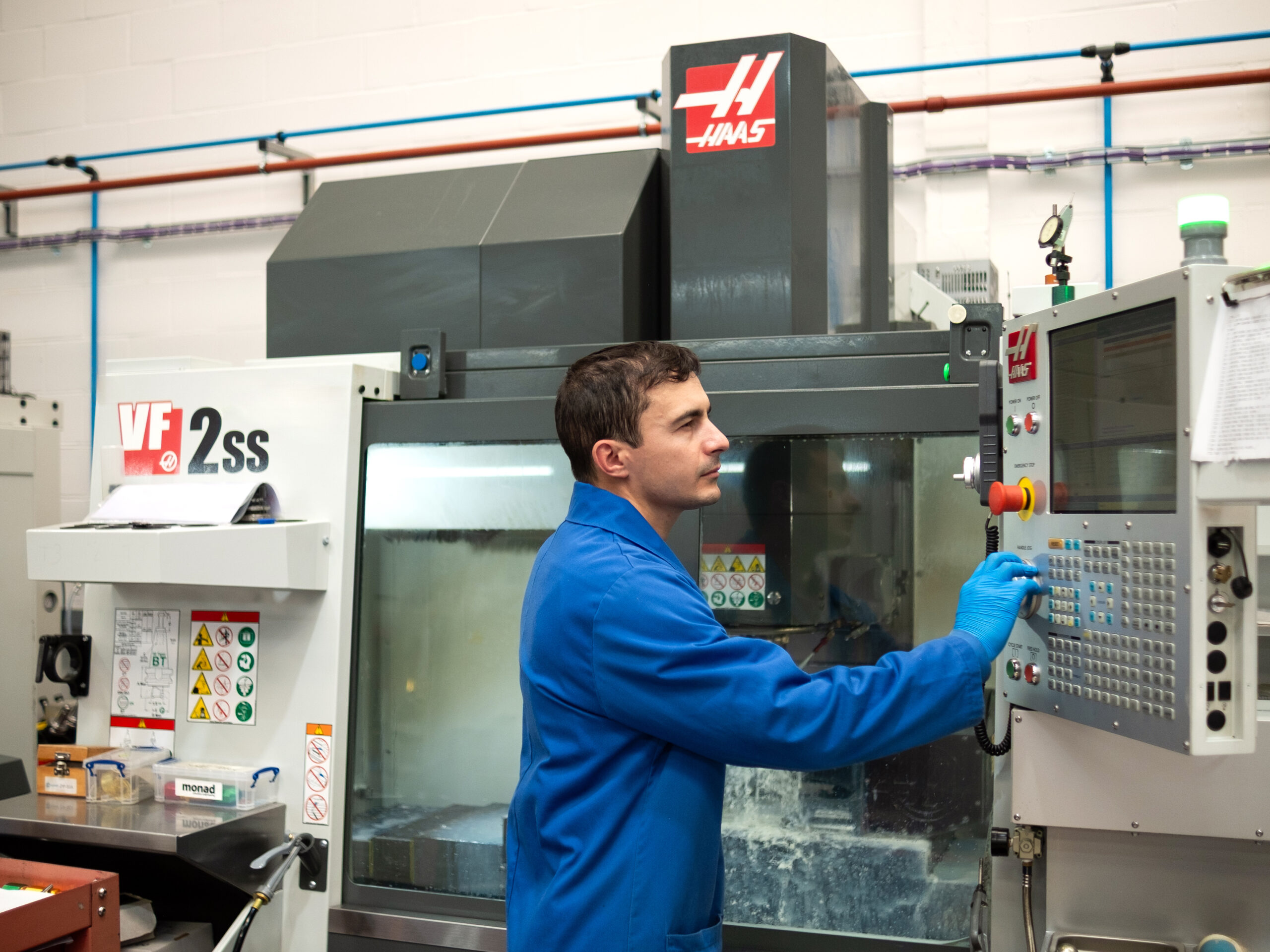
The workshop now boasts an impressive line-up of 15 Haas CNC machines; twelve vertical machining centres and three turning centres. Monad’s first Haas machine, acquired in 2001, has just been part-exchanged for a state-of-the-art VF-2SSYT vertical machining centre featuring a super-speed 30+1 side-mount tool changer, extended Y-axis travel, and full 5-axis capability.
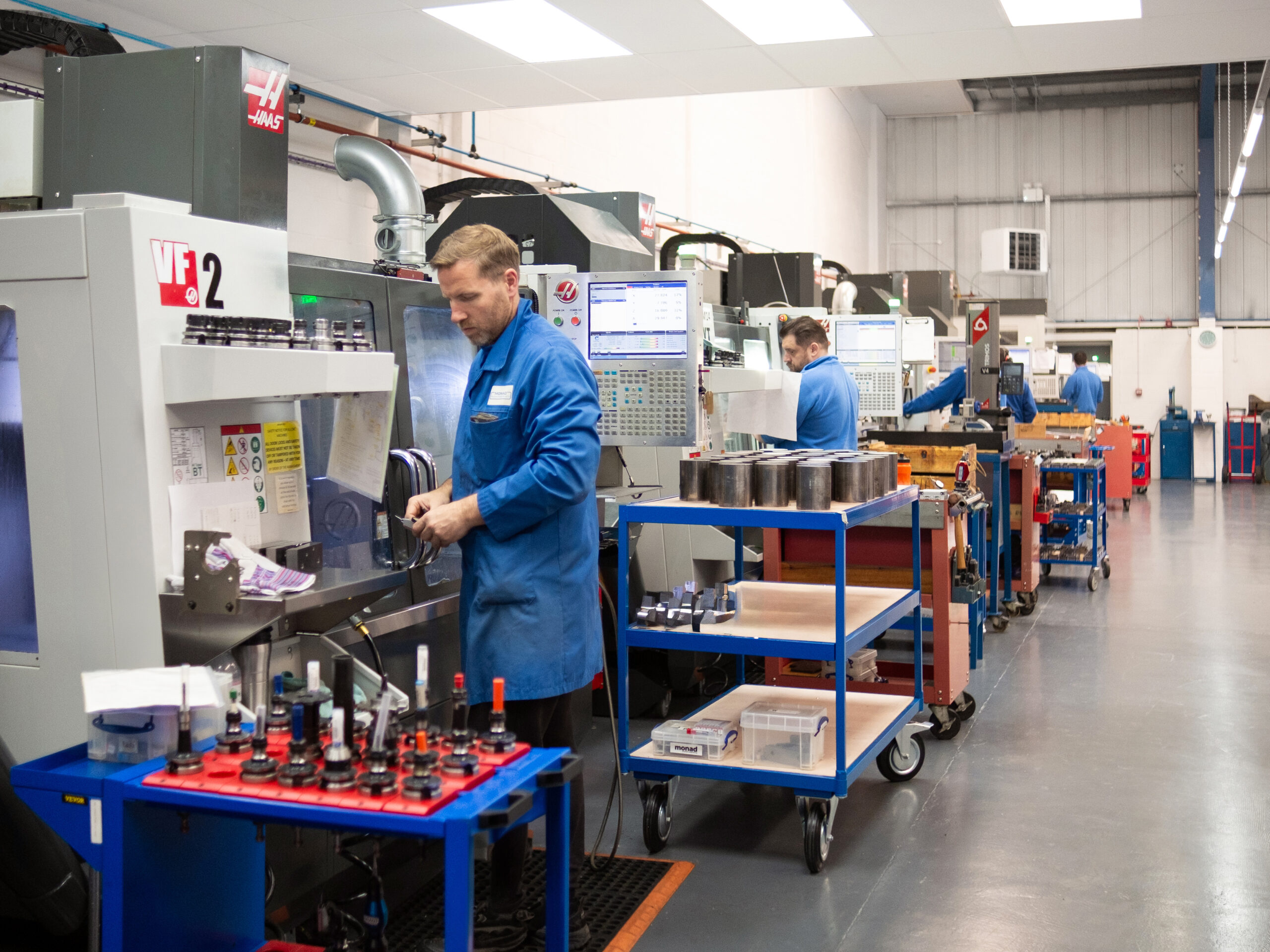
“We invested in our first 5-axis machine, a Haas UMC-500, in 2023,” Steve recalls. “Initially, I had my doubts, but it quickly proved invaluable, so much so that we bought a second machine just three months later.”
The Haas UMC-500 Universal Machining Centre offers 5-axis simultaneous machining with a 10,000 rpm spindle and integrated wireless probing. “Our sales manager, Don Cole, was tremendous, guiding us seamlessly from 4 to 5-axis machining,” Steve continues. “Their engineers provided comprehensive on-site training and ongoing support a quick phone call away, making the transition straightforward. Haas’s service has genuinely been second to none, they got us confidently through the first few 5-axis jobs, paving the way for many more.”
“The jump to 5-axis has opened up a lot for us, but what really makes it powerful are features like TCPC and DWO. They save hours in setup time, especially on complex parts. We can clamp a component anywhere on the table and still machine it accurately. It’s made us far more flexible and efficient.”
TCPC (Tool Centre Point Control) and DWO (Dynamic Work Offsets) allow the machine to adjust automatically for changes in part location. Instead of rewriting or reposting a program for each setup, the control keeps the toolpath consistent, even if the part isn’t in the same place every time.
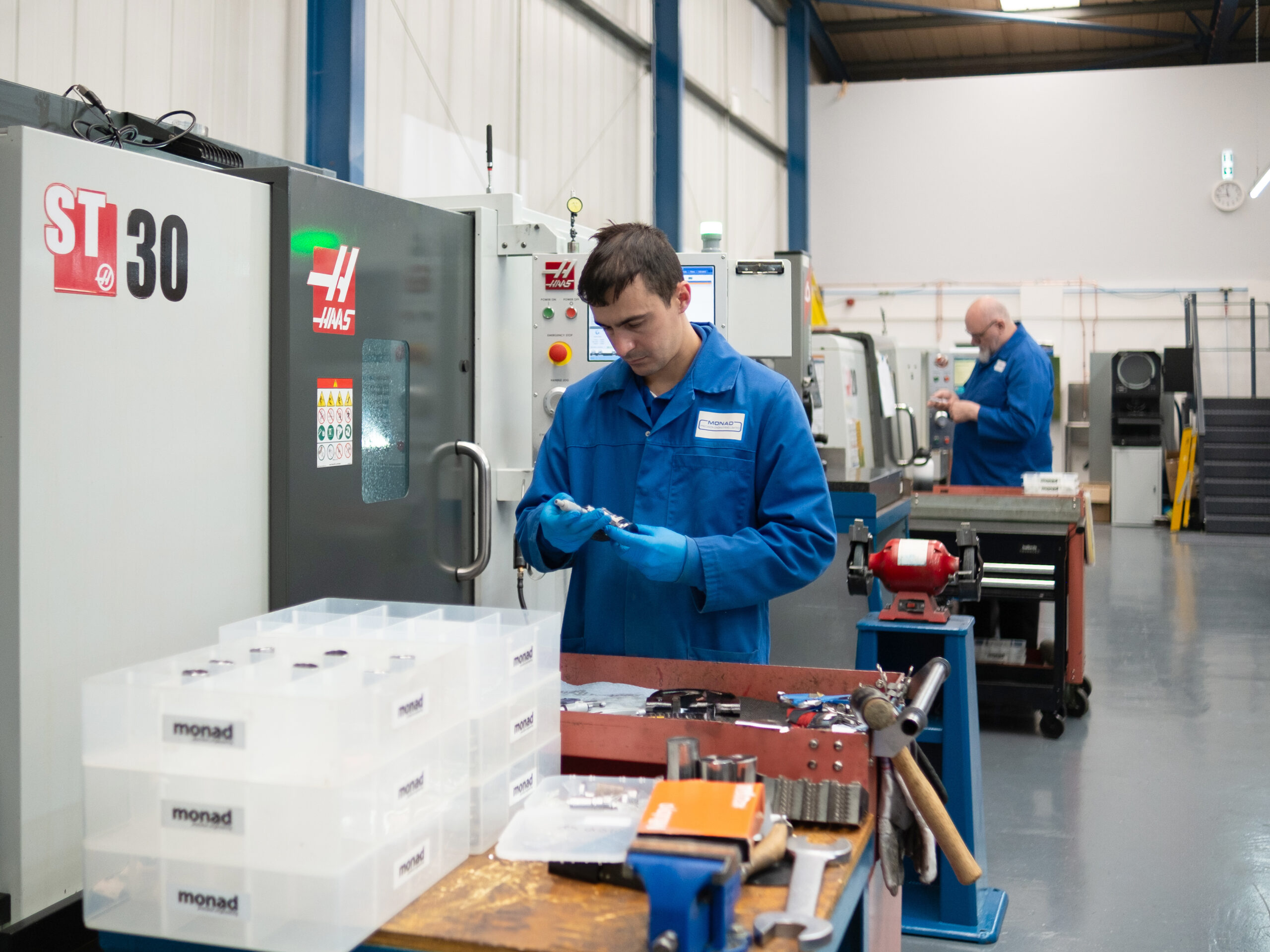
“Whether we’re running full simultaneous 5-axis jobs or using 3+2 positioning, the machine handles it with ease. It’s incredibly capable and fits straight into our workflow, the transition from CAD to cutting is seamless.”
Production controller and director Charlie Reeder adds, “It wasn’t easy letting go of our original Haas vertical; it had been solid for 25 years and was still running well. But the new generation of machines brings so much more to the table: faster cycles, smarter features, and useful touches like built-in air gun holders, coolant nozzle brackets and we really appreciate the integrated oil skimmers to keep everything cleaner. The part-exchange offer from Haas was one we couldn’t refuse; it made upgrading straightforward and affordable. Continuous investment is how we stay competitive.”
Increasingly, Monad is contributing to design processes, beyond their traditional ‘make to print’ approach. “Getting involved in projects at the design stage allows us to advise on tolerances, radii, and operational efficiency,” Charlie explains. “It streamlines the manufacturing process, benefits everyone involved, and has become even smoother now we’re all in one location.”
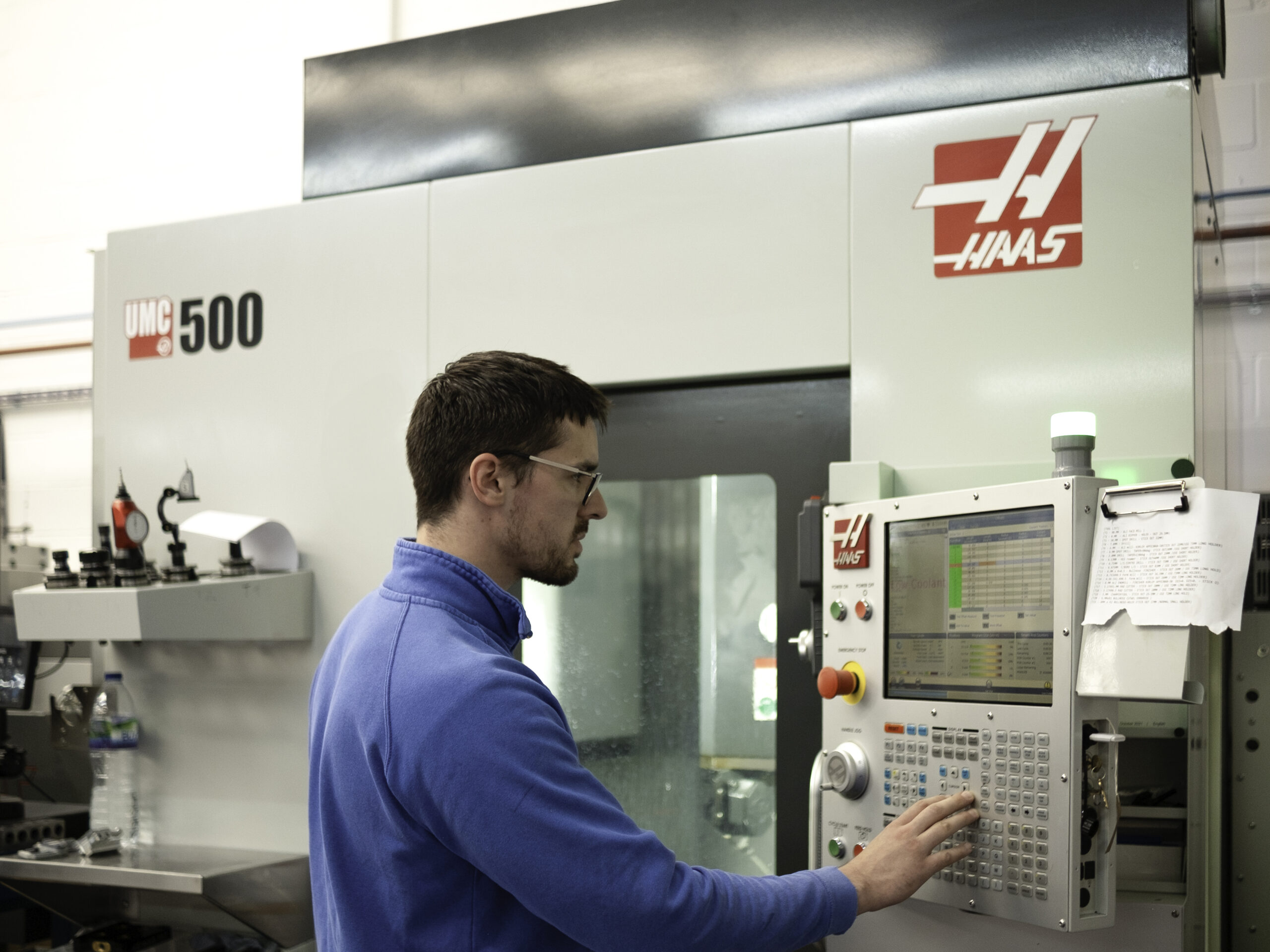
Steve agrees wholeheartedly: “Our designers use OneCNC and Fusion 360 CAD/CAM software, feeding data directly to the machines. Our customers appreciate that our CNC fleet is entirely Haas, ensuring program compatibility across machines without additional proving or rewriting. We’re achieving tolerances as tight as ±5 microns, so reliability and consistency are crucial. The Haas machines deliver exactly that and keep our operators happy too.”
“After 50 years, our family is still inspired by every new challenge. Bringing the whole team under one roof, and having the right equipment behind us, means we’re in a stronger position than ever. Haas has played a big part in that, helping us stay at the forefront of precision engineering for the next generation and beyond.”